Value‑Add Ideas For Agua Fria Homes And Parcels
June 4, 2026
June 4, 2026
If you own a home or parcel in Agua Fria, the usual value-add advice can miss the mark. This area is shaped by county planning, historic-community context, water realities, and property-specific rules that can change from one parcel to the next. The good news is that thoughtful improvements can still pay off, especially when you focus on usability, resilience, and fit. Let’s dive in.
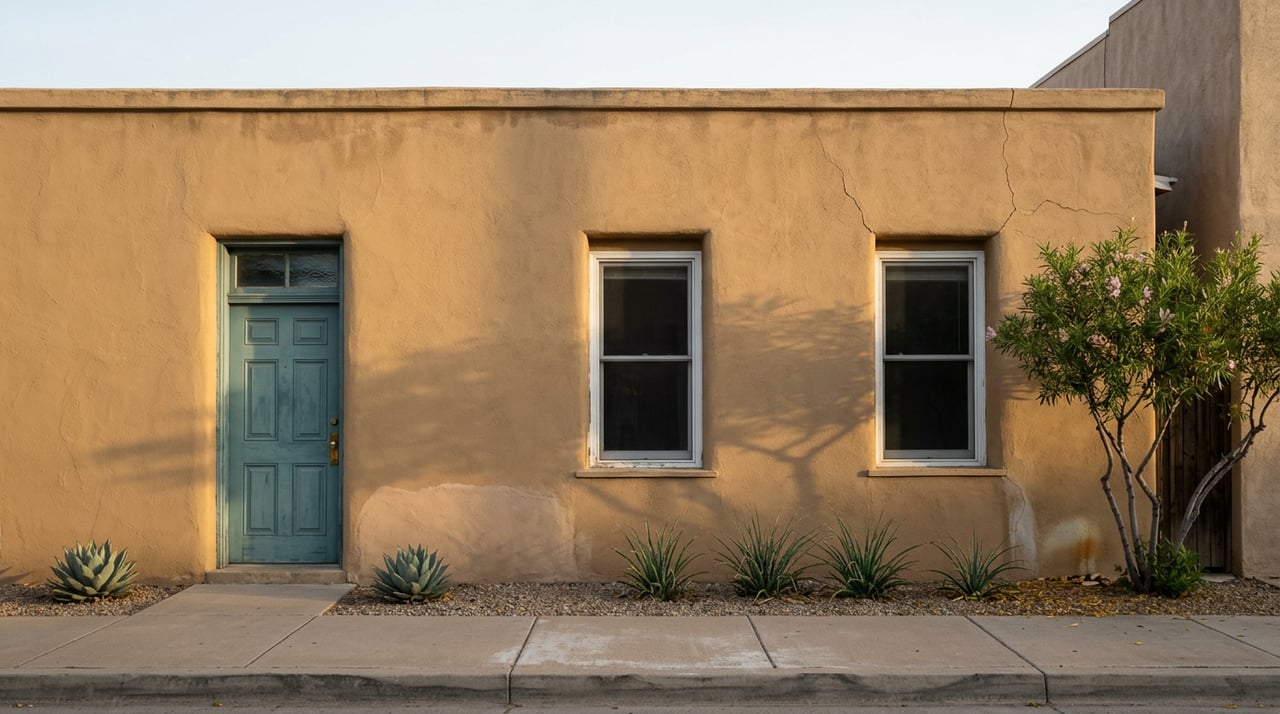
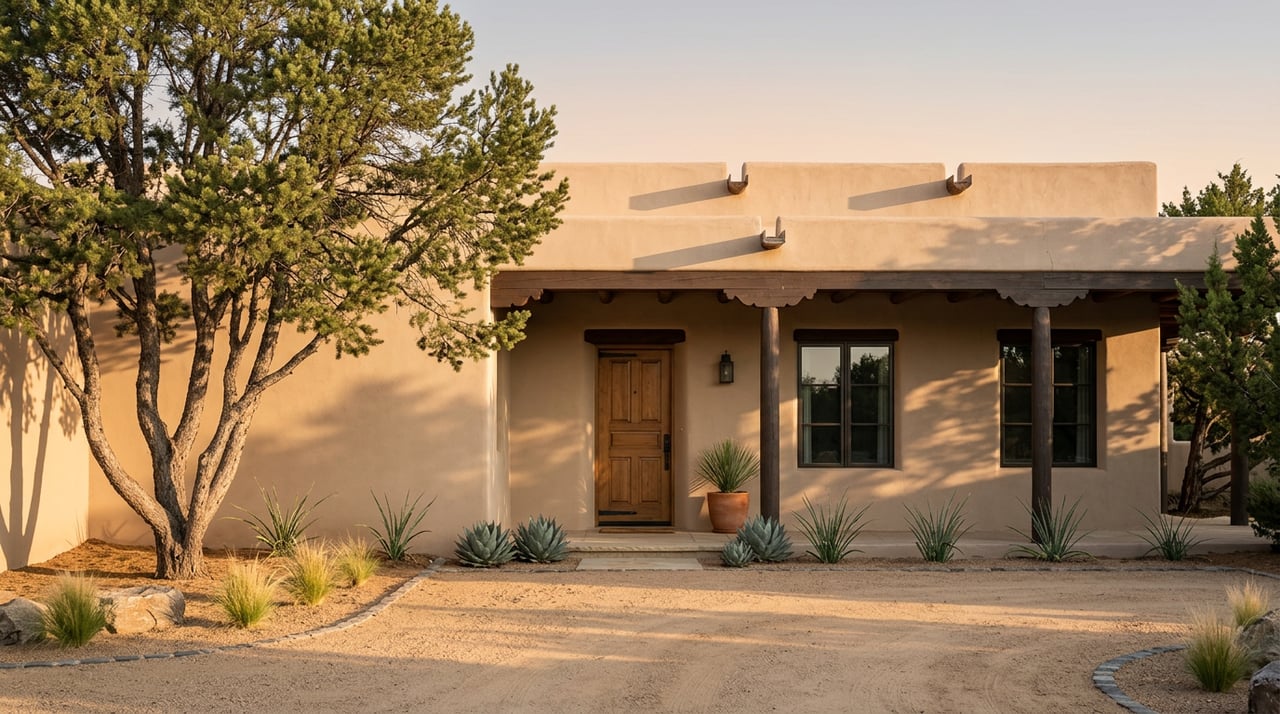
Agua Fria is not a one-size-fits-all market. Santa Fe County identifies the Village of Agua Fria as a Traditional Historic Community, and whether your property falls under City of Santa Fe rules or Santa Fe County rules is one of the first questions to answer before planning any work.
That matters because the Village of Agua Fria Community Plan emphasizes rural character, open space, agricultural and livestock traditions, and cultural and historical resources. In practical terms, that tends to support modest, durable, context-sensitive improvements rather than oversized suburban-style projects.
Local market conditions also support a measured approach. Recent Santa Fe County data places home values in the mid-$500,000s to high-$500,000s, with homes generally selling around list price or slightly below and going pending or selling in roughly 23 to 60 days. In this kind of market, buyers are often more responsive to useful, well-documented improvements than speculative luxury overbuilds.
Before you budget a portal, casita, or major addition, verify the property basics. In Agua Fria, parcel value is often tied as much to legal and utility readiness as it is to square footage or acreage.
A smart first review should include:
This step can save you time and money. A project that looks simple on paper can change quickly if septic approval, drainage work, or access improvements are needed first.
For many Agua Fria owners, the best value-add projects are the least flashy ones. Cleanup, paint, drainage correction, irrigation repair, lighting, and basic energy upgrades can improve daily function without forcing a large approval process.
These kinds of updates also align with what buyers tend to notice right away. A home that feels cared for, efficient, and easy to maintain often makes a stronger impression than one with an ambitious but incomplete remodel.
If you plan to sell in the near future, documentation matters too. Records for completed work, permits where required, and a clear scope of improvements can help buyers feel more confident about the property.
Energy upgrades are one of the most practical ways to add value in this area. In the City, new construction and guest houses must meet the Santa Fe Green Building Code, including performance benchmarks such as a HERS index of 60 or less and a WERS score of 70 or less. In the County, new residential structures must achieve a HERS rating of 70 or less.
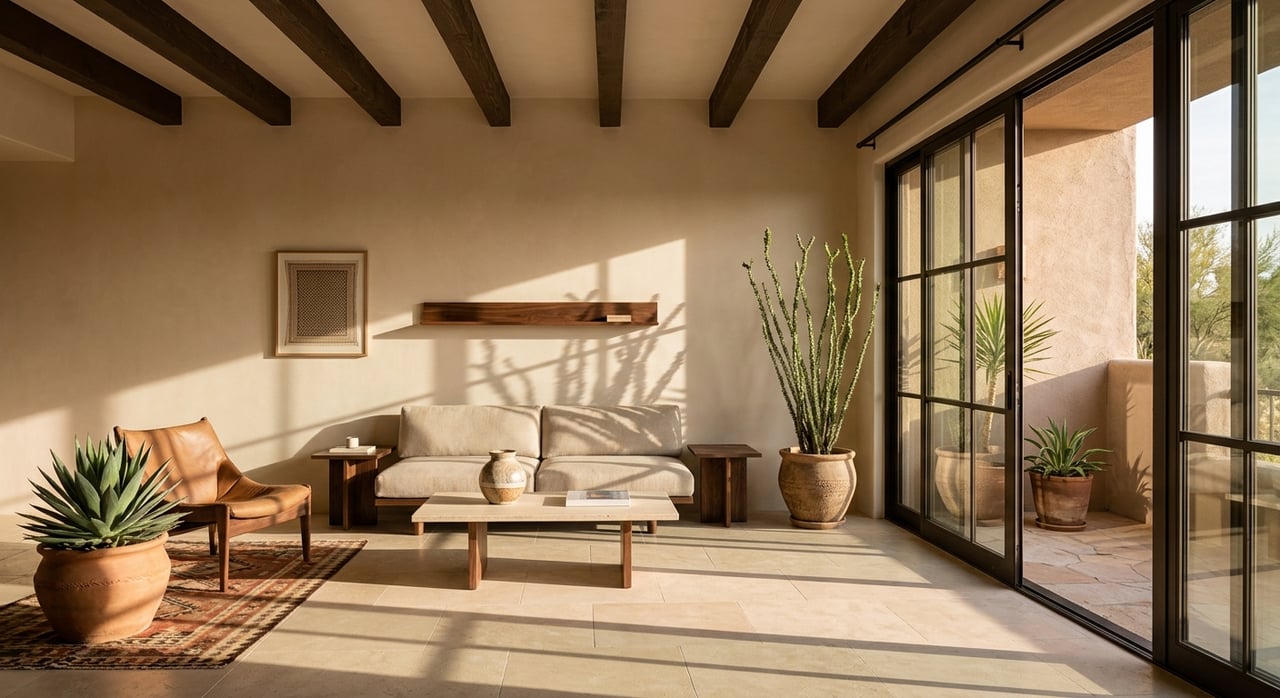
Even when you are not building from scratch, upgrades like air sealing, insulation, efficient HVAC, low-flow fixtures, and solar can support lower operating costs and better long-term performance. Buyers increasingly pay attention to comfort and utility efficiency, especially in a high-desert climate.
Water use is a major part of value in Northern New Mexico. Santa Fe County encourages WaterSense fixtures, rainwater catchment, rain gardens, and green stormwater approaches, while the City publishes seasonal water conservation requirements.
That makes drought-tolerant landscaping and efficient irrigation more than just cosmetic upgrades. They can improve livability, reduce maintenance, and better match the long-term environmental realities of the area.
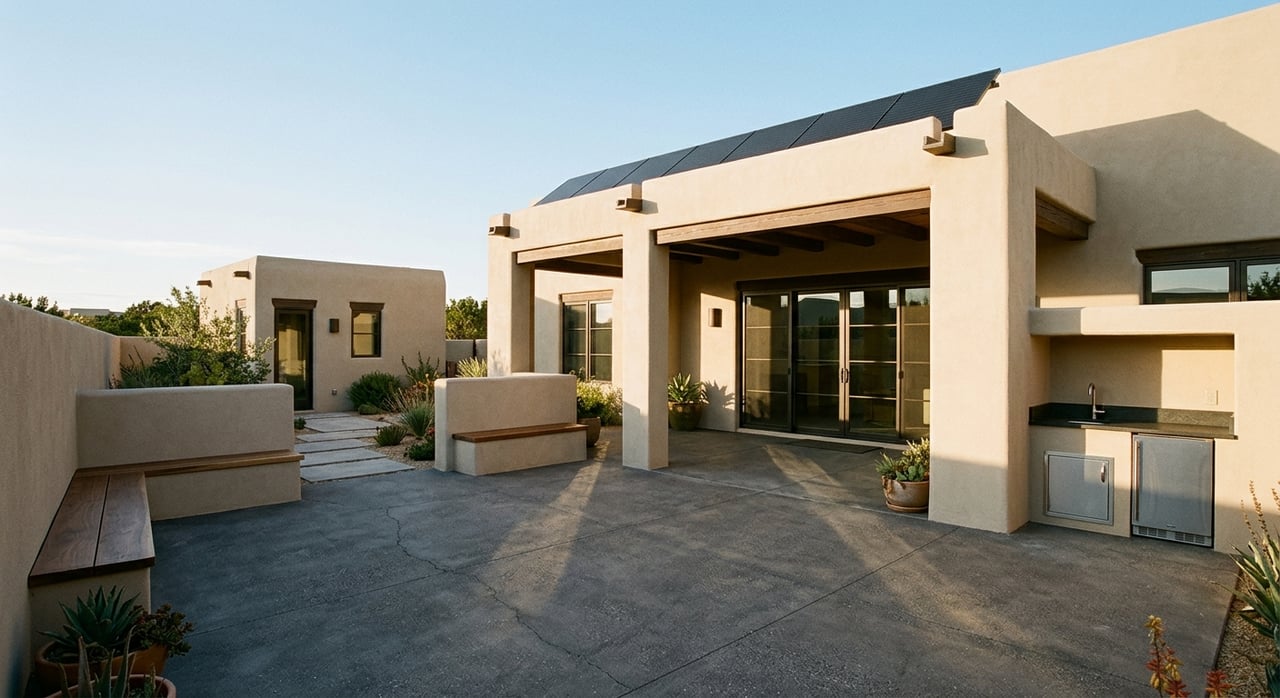
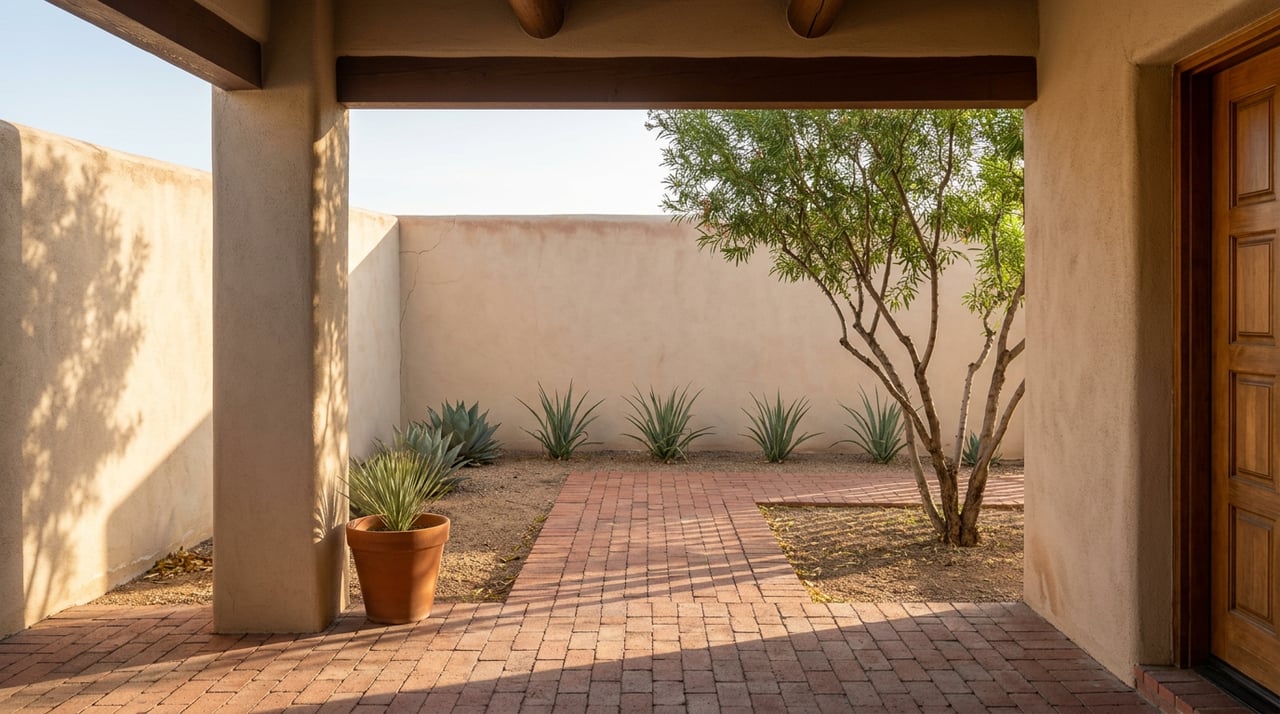
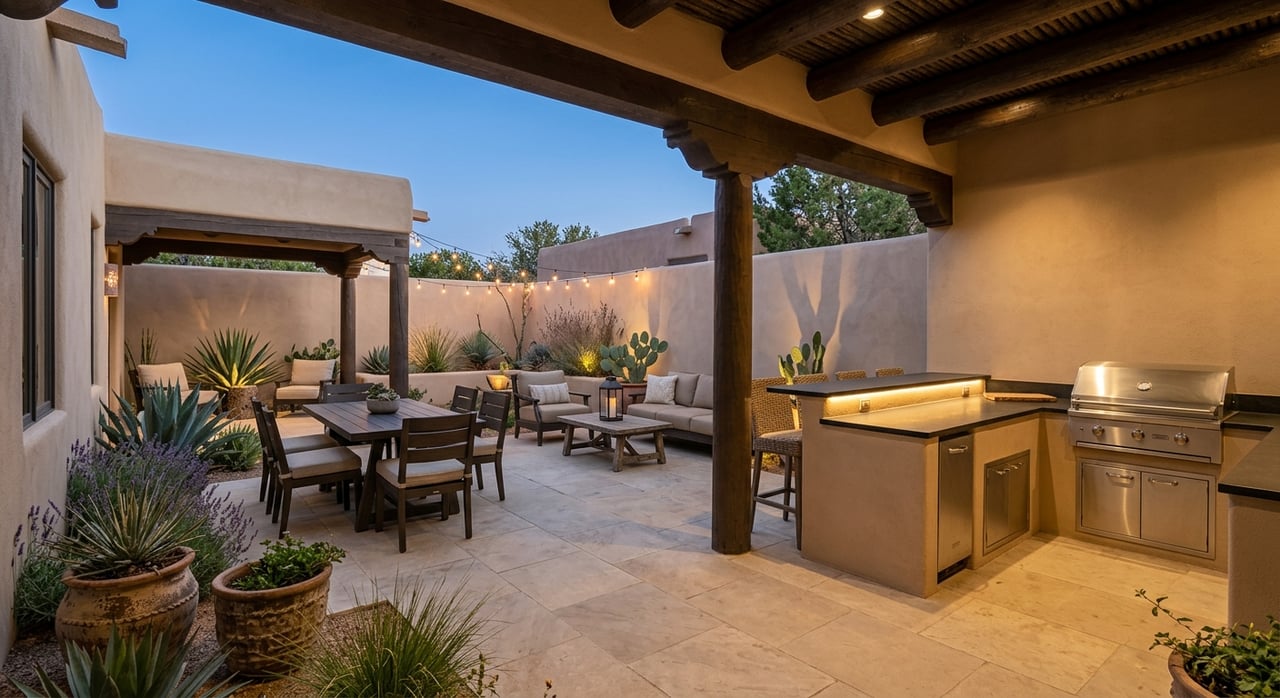
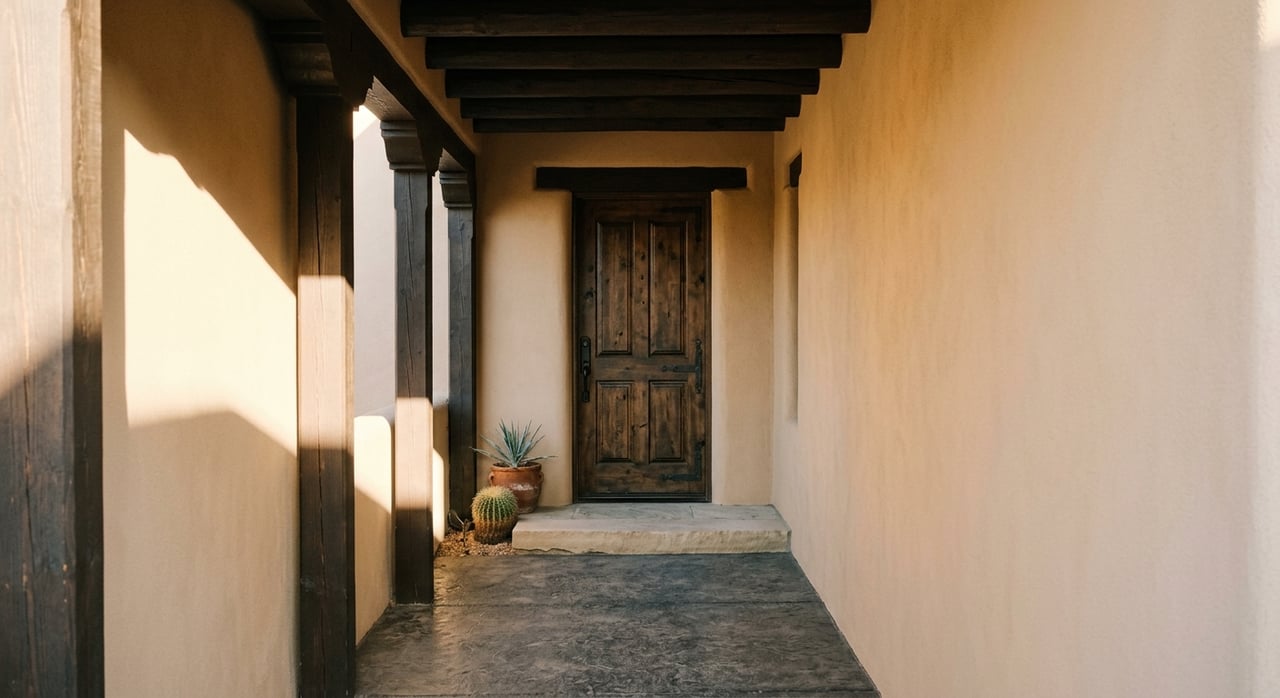
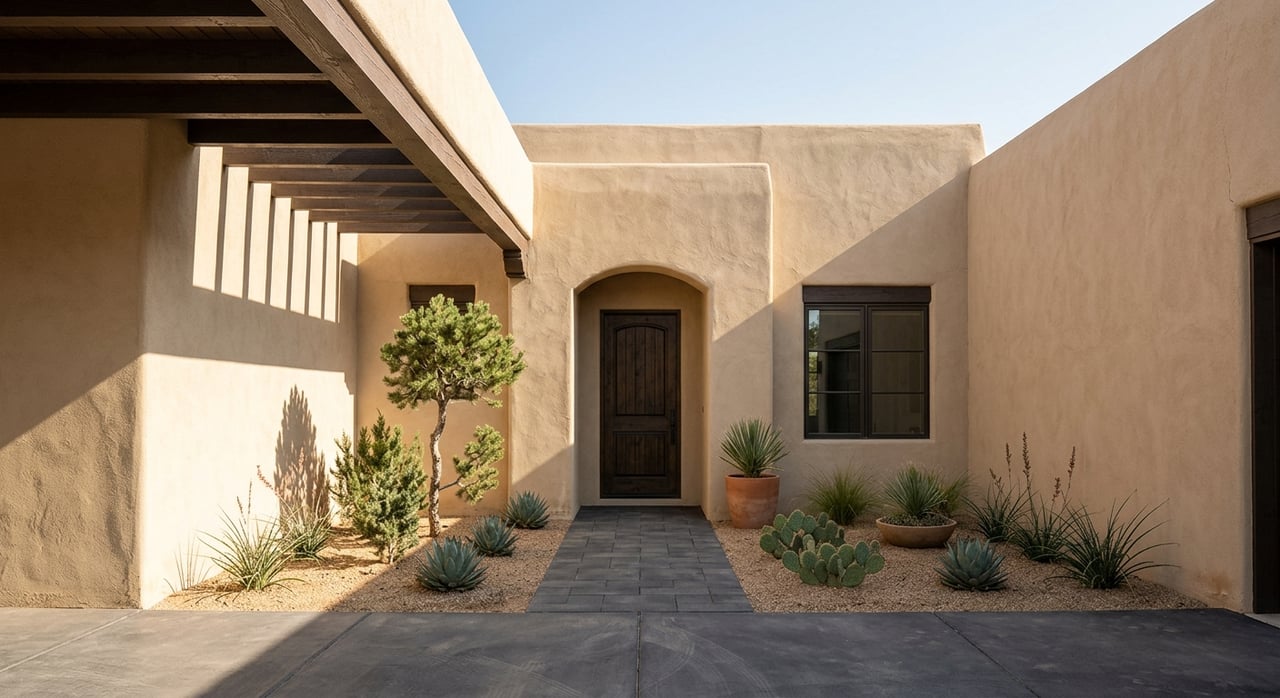
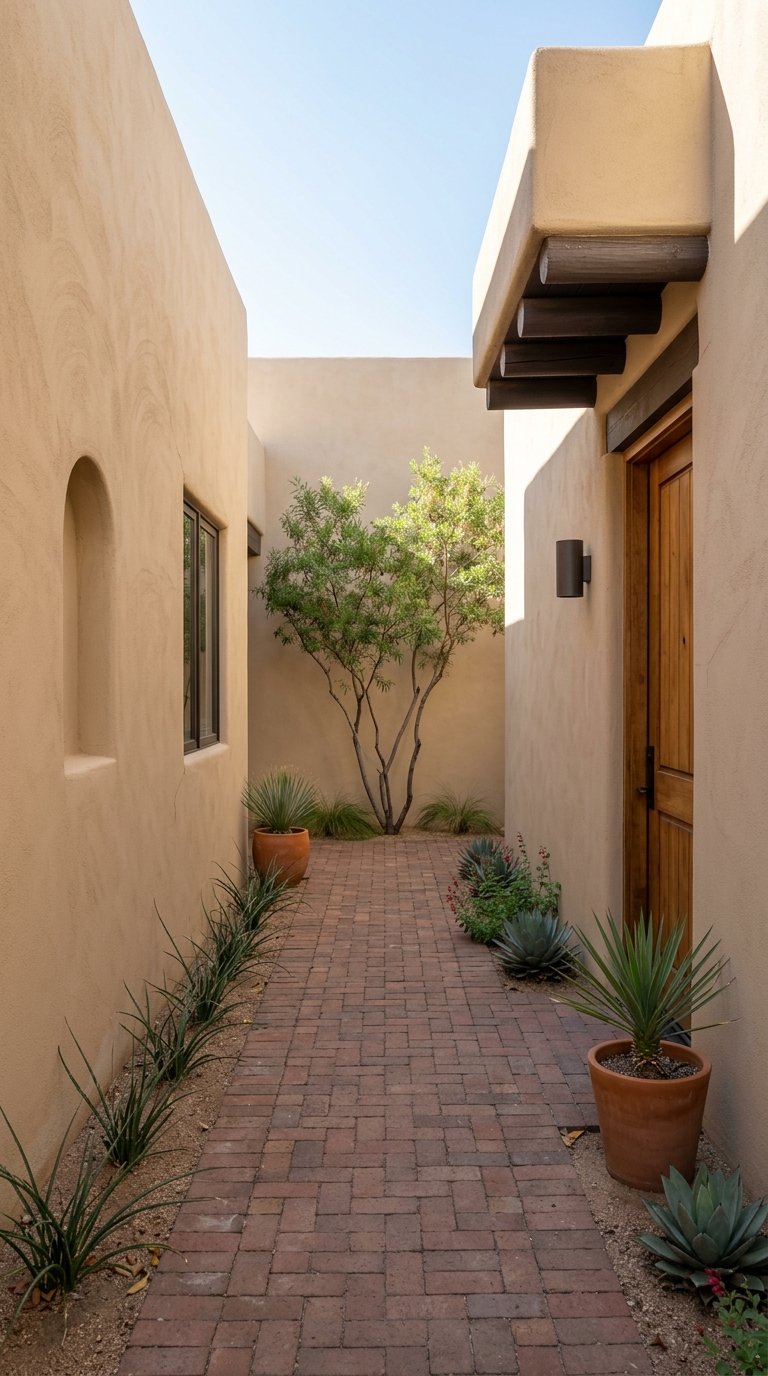
In Agua Fria, outdoor living can be one of the most effective ways to make a property feel larger and more usable. Covered portals, patios, courtyards, shaded dining areas, and modest hardscape often fit the local setting better than a large interior expansion.
This approach works well because it respects the area’s rural and historic context while adding everyday function. A well-designed outdoor room can create space for dining, gathering, and quiet use without pushing the project into a much bigger conditioned-space build.
For many properties, this is the sweet spot between cost, usability, and market appeal. It can make a home live better while keeping the scale and character of the site intact.
Outdoor features tend to add the most value when they are simple, durable, and easy to understand. Think about improvements that expand how the property lives rather than features that require heavy upkeep.
Strong options may include:
In Agua Fria, outdoor living usually works best when it feels integrated with the home and parcel, not tacked on as a trend-driven extra.
Small secondary structures can be a meaningful value-add, but only when the parcel supports them and the rules allow them. In Santa Fe County, accessory dwelling units are allowed in many but not all areas, so the zoning Use Matrix must be checked for the specific district.
When allowed in the County, ADUs must be incidental and subordinate to the main residence. County guidance says they are generally limited to under 50% of the heated floor area of the principal residence and under 1,400 square feet, with the same architectural style, one story, and shared driveway and utilities. City rules are separate, and the City’s green-building requirements apply to guest houses and accessory dwellings.
That is why compact casitas and studios are often a more realistic path than trying to force a second primary residence onto a small lot. Smaller projects are also more likely to work with the practical limits of access, utilities, and site design.
Before planning a casita or studio, make sure you can clearly answer these questions:
If any of those answers are uncertain, it is usually wise to pause before spending heavily on design.
In Agua Fria, land improvements can influence value as much as interior updates. A parcel that is accessible, well-drained, and thoughtfully landscaped may be more attractive than a larger but less usable site.
Santa Fe County requires development permits for some additions, grading, subdivision work, retaining walls over 4 feet, fences or walls over 6 feet, solar, and more. In the City, permits are required for most construction work, including items such as storage sheds, solar panels, driveway construction, roofing, and window replacement.
This is why access, grading, and utility readiness can be such important value drivers. Buyers and investors often look past raw acreage if the site work still needs major problem-solving.
A turf-heavy yard is rarely the strongest fit for this setting. County guidance points property owners toward rain gardens, cisterns, rain barrels, and native or drought-tolerant approaches because the region faces drought, aridification, groundwater depletion, and stormwater runoff concerns.
Wildfire guidance also supports defensible-space planning, cleared vegetation, low grass height, and non-combustible mulch near homes. In practice, a layered, native, fire-wise landscape often fits Agua Fria better than high-water planting schemes.
Utility conditions can shape what is truly possible on a parcel. Santa Fe County is pursuing sewer-line construction in the Historic Village of Agua Fria so residents can move off septic systems and cesspools, and that can affect future development options.
The County also notes that some additions can trigger rainwater catchment requirements, while a bedroom addition can require septic approval from the New Mexico Environment Department. For owners considering a larger addition, a casita, or a redevelopment plan, utility capacity is not a side issue. It is often the issue.
If a property does not yet have sewer service, or if the septic situation is tight, the highest-return move may be solving site and utility constraints before tackling new square footage.
If you want to add value without overreaching, a phased approach usually makes the most sense in Agua Fria.
Confirm jurisdiction, zoning, and utility capacity first. This includes checking whether the parcel is in the City or County, whether an ADU is allowed, and whether water, septic, or sewer service can support your goals.
Tackle cleanup, paint, drainage correction, irrigation repair, lighting, native planting, and basic energy improvements. These updates often create strong risk-adjusted value while keeping costs and permitting more manageable.
Once the basics are in good shape, consider a portal, patio, or courtyard. This is often where owners gain the most day-to-day enjoyment and a strong visual payoff.
Only after the parcel facts are clear should you move into a secondary structure plan. By then, you will have a better sense of whether the investment is practical and aligned with the property.
The best value-add ideas in Agua Fria are usually the ones that respect the land, the rules, and the character of the area. Instead of chasing maximum size, focus on function, resilience, water-wise design, and improvements that are clearly usable.
That approach tends to be more in step with local planning, local permitting, and current Santa Fe County market conditions. It can also leave you with a property that lives better now and presents more clearly when it is time to sell.
If you are weighing upgrades, a sale, or a parcel strategy in Agua Fria, working with a team that understands both real estate value and project feasibility can make the path much clearer. The Ralph Alan Real Estate Group brings local market knowledge, design-minded guidance, and hands-on project perspective to help you make smart next moves.
Stay up to date on the latest real estate trends.
Get In Touch With Our Team To Learn More
Ralph Alan Real Estate Group
218 Camino La Tierra Suite B2 Santa Fe NM 87506 (505) 986-2000