Designing Low‑Maintenance Outdoor Living In Las Campanas
July 16, 2026
July 16, 2026
If you love the idea of outdoor living in Las Campanas but not the idea of constant upkeep, you are not alone. Many owners want a landscape that looks polished, fits the high-desert setting, and still works well when they are away for stretches of time. The good news is that low-maintenance design does not have to feel bare or utilitarian. With the right layout, materials, and planting strategy, you can create an outdoor space that is beautiful, durable, and easy to manage. Let’s dive in.
Las Campanas is a gated, controlled-access community with 24-hour security and vacation observe-and-report services, which makes it a natural fit for lock-and-leave living. That lifestyle often works best when your exterior spaces feel finished and inviting without needing constant hands-on care. In other words, the goal is not less beauty. It is less friction.
The local climate also shapes smart outdoor design. Santa Fe’s high-desert conditions bring relatively low annual precipitation, warm summer days, cold winter nights, and a short but intense monsoon season. A landscape that handles sun, dryness, drainage, and seasonal swings well will usually be easier to maintain over time.
There is also a design review layer to keep in mind. Las Campanas has master documents, many estates have their own CC&Rs, and exterior changes may require review. That means the best outdoor projects balance your lifestyle goals with site conditions, water use, drainage, vegetation, and the community’s design standards.
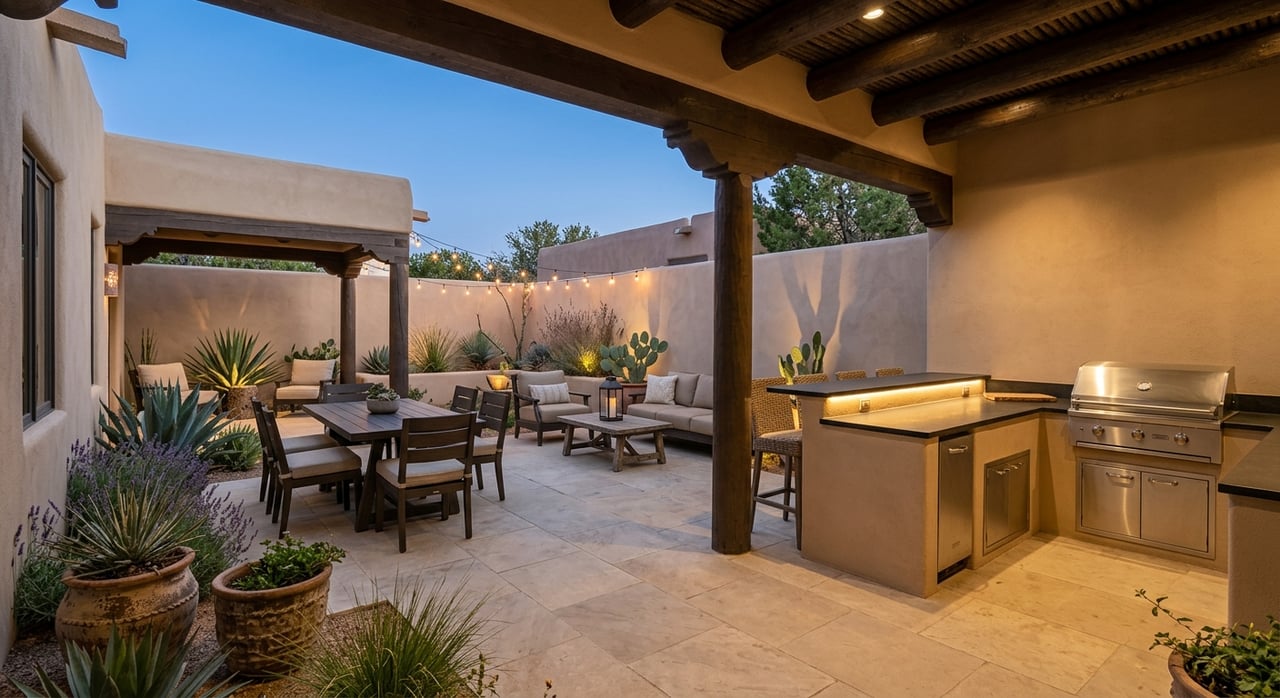
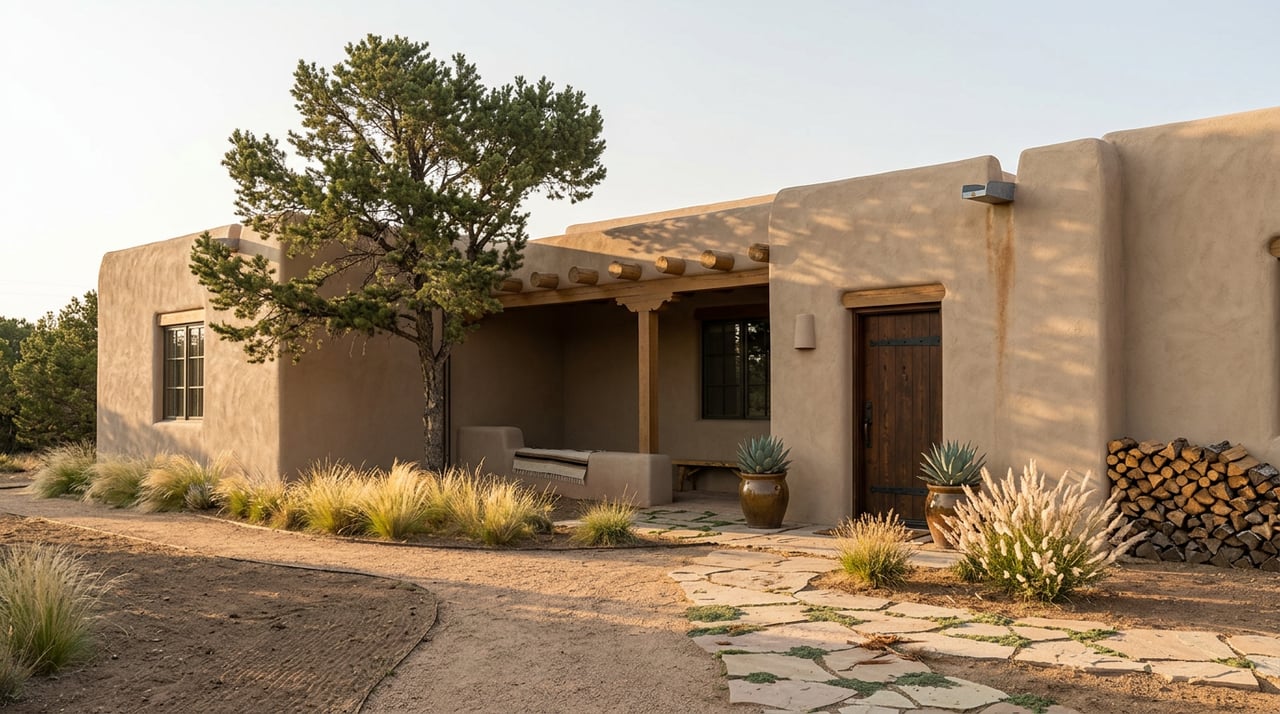
One of the simplest ways to reduce maintenance is to organize the landscape around a main patio, portal, or courtyard. This gives you a clear outdoor living core where seating, dining, and cooking can happen close to the house. It also keeps your highest-use areas the easiest to irrigate, furnish, and maintain.
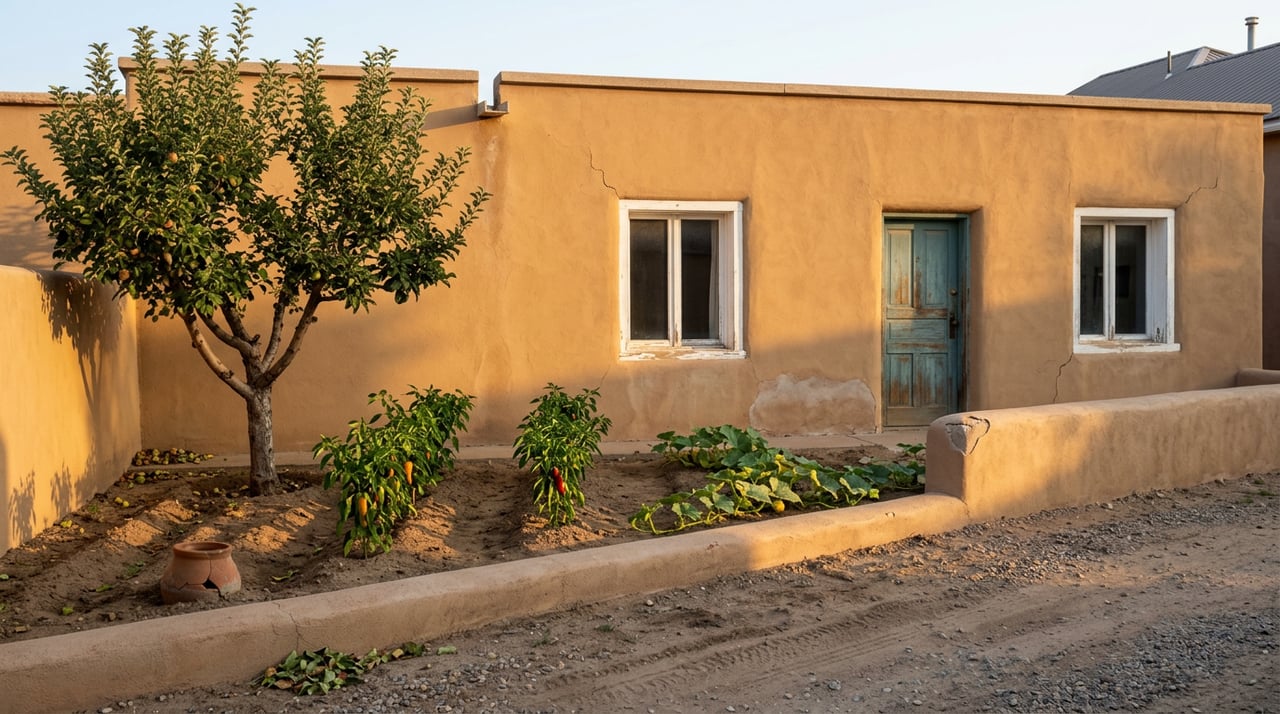
This approach aligns well with xeriscape planning principles recommended by New Mexico State University. Instead of spreading water and maintenance evenly across the whole lot, you create a more irrigated oasis near the home and transition to lower-water areas farther out. The result can feel intentional and luxurious rather than unfinished.
For many Las Campanas homes, that means treating the patio as the heart of the design. You might focus your best paving, shade elements, containers, and planting pockets there, while allowing outer areas to stay simpler and more natural in character. That is often a better long-term strategy than trying to activate every edge of a large lot.
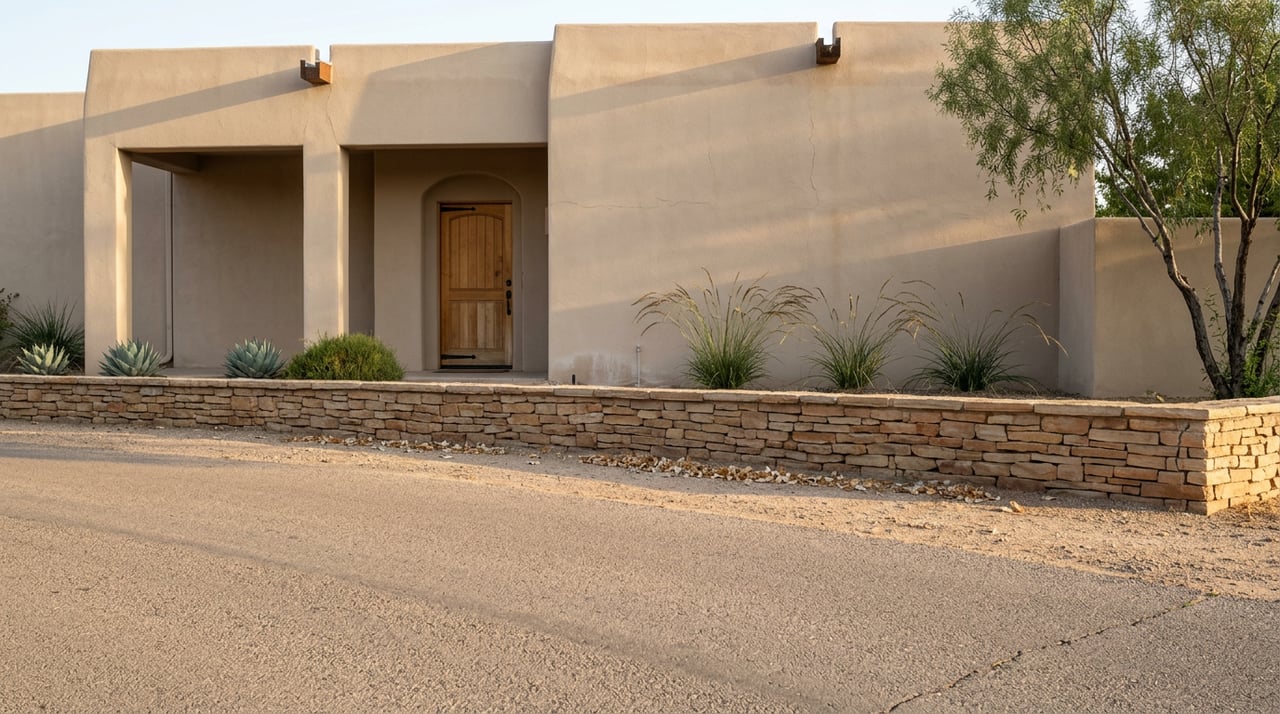
Hardscape does a lot of the heavy lifting in a low-maintenance landscape. Pavers, stone surfaces, courtyards, seat walls, and defined walkways reduce the amount of irrigated planting area and help the yard feel complete. They also wear well in a setting where sun exposure, wind, and seasonal temperature swings can be tough on softer materials.
That said, low maintenance should not mean covering everything in gravel or rock. NMSU specifically cautions that rock mulch alone can overheat a site and may even contribute to higher cooling demands. In practice, the most comfortable outdoor spaces usually combine hard surfaces with shade, planted areas, and a few softer visual breaks.
A better formula is to think in layers:
This mix tends to look more refined and feel better to use year-round.
In Las Campanas, plant selection is not just a style decision. The community maintains an approved plant list, and sub-associations may have additional rules. Before making changes, it is smart to confirm what is allowed for your estate and whether your project needs design review.
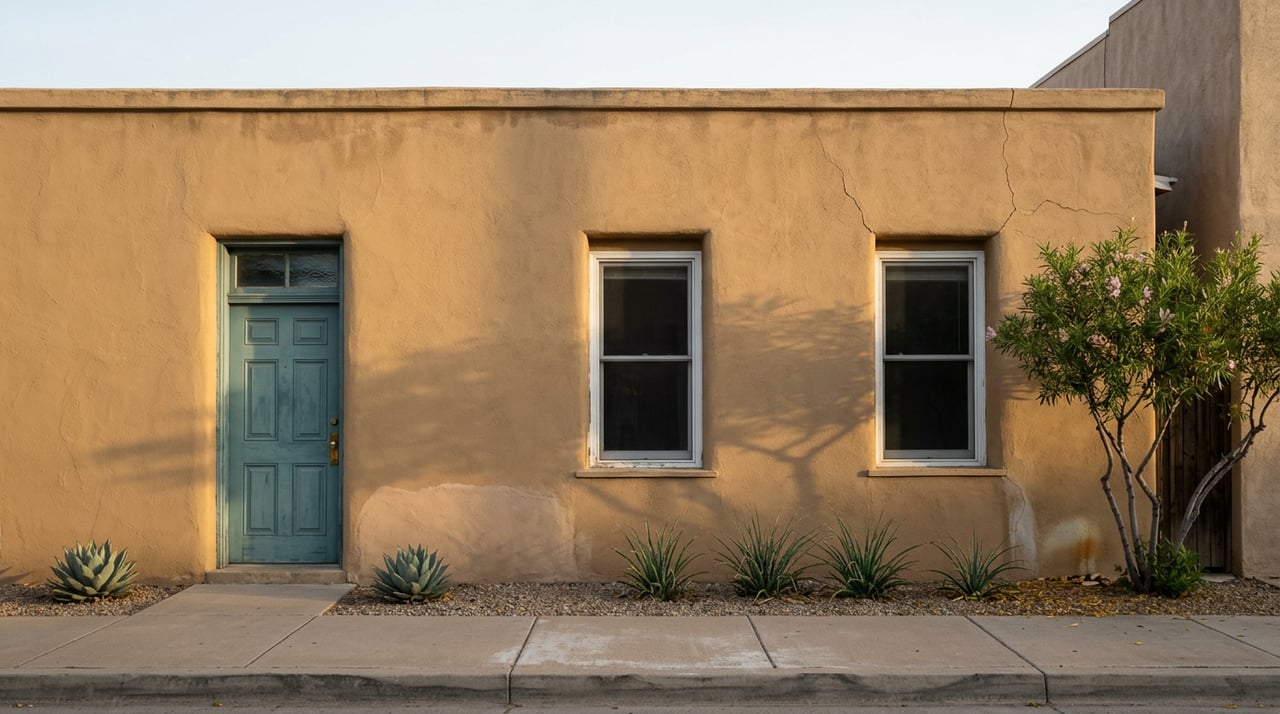
The approved list includes many plants that fit a low-maintenance, high-desert landscape. Examples include agave, yucca, desert spoon, blackfoot daisy, desert marigold, prairie zinnia, trailing rosemary, desert willow, blue palo verde, desert museum palo verde, velvet mesquite, Texas mountain laurel, and Mexican buckeye. These kinds of choices can support a more water-wise design while still giving you structure, color, and seasonal variety.
Just as important, not every approved plant has the same water needs. The Las Campanas list includes some species that require significantly more irrigation, such as pygmy date palm. A low-maintenance plan usually works best when you narrow the palette to plants that fit the lot’s sun exposure, wind, irrigation zones, and desired upkeep level.
Efficient irrigation is a big part of keeping an outdoor space manageable. NMSU recommends separating irrigation zones and using systems such as drip, bubbler, micro-spray, or soaker lines for shrubs, trees, and perennial beds. That kind of targeted watering is usually more practical than broad, one-size-fits-all coverage.
If you want turf, use it very selectively. The most effective low-maintenance landscapes typically keep lawn to a minimum and only where it serves a real purpose. In many Las Campanas settings, a small, intentional area performs better than a large lawn that demands more water, mowing, and attention.
The larger point is that not every part of the yard should be watered the same way. Grouping plants by water need helps reduce waste, simplify maintenance, and protect the overall look of the landscape. It also supports a cleaner, more durable design.
A beautiful outdoor living space still has to feel good at midday in July and usable on cool evenings. In Santa Fe’s climate, comfort often comes down to shade, surface temperature, and wind exposure. These factors matter just as much as the plant list.
Covered portals, deep overhangs, pergola-like structures, and carefully placed trees can make a patio much more livable. They also help balance hardscape so the yard does not feel overly reflective or hot. This is especially useful if your design includes stone, pavers, or gravel near major seating areas.
A low-maintenance outdoor room should also be easy to furnish and reset. Fewer, better-defined gathering areas often outperform a yard filled with small, disconnected destinations. When the layout is simple, upkeep tends to be simpler too.
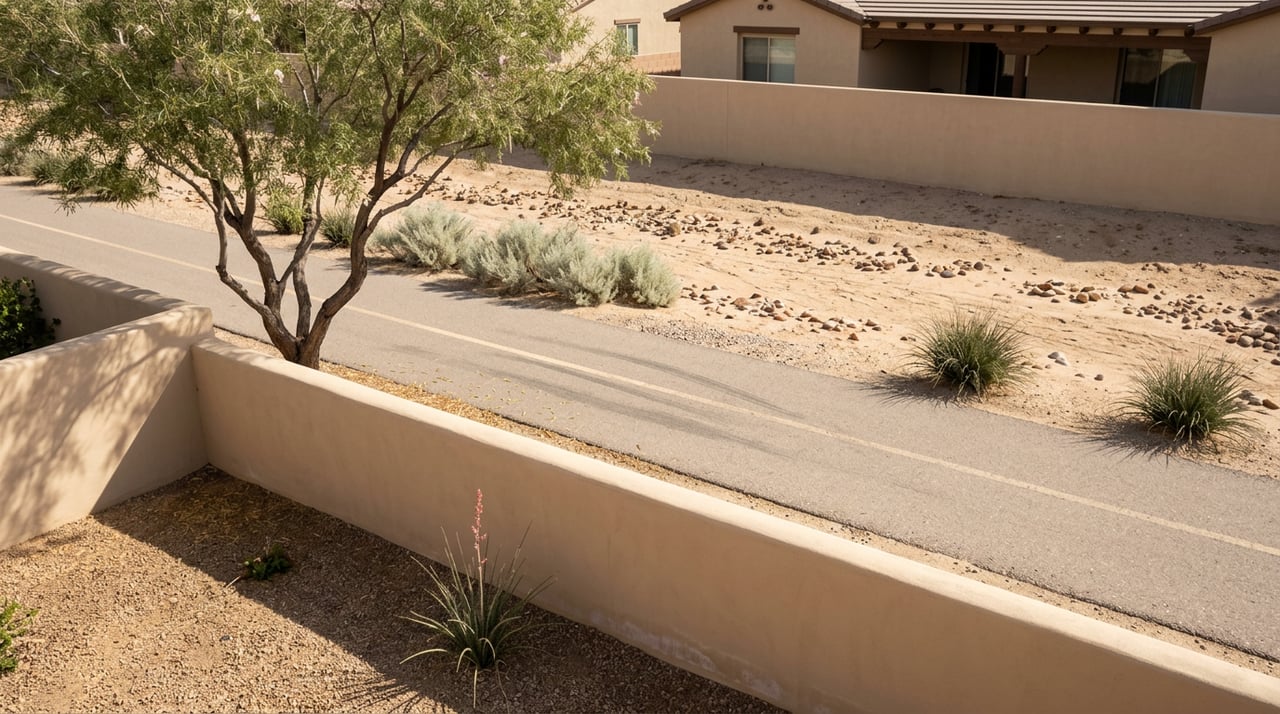
In Las Campanas, outdoor improvements should not ignore stormwater. Santa Fe County treats runoff as something to manage carefully, and supports green stormwater strategies that capture and infiltrate water where it falls. Rain gardens, berms, swales, tree wells, rain barrels, and cisterns can all play a role depending on the project.
This matters because a yard can be low maintenance on sunny days but problematic during monsoon season if water has nowhere to go. Smart grading and drainage planning help protect patios, walkways, drive courts, and planted areas. They can also make the landscape more resilient without adding visual clutter.
Roof runoff is one opportunity many owners overlook. Directing runoff toward planted zones can support water capture while making those areas more functional and attractive. In a dry climate, that kind of planning can do double duty.
Good outdoor lighting should support safety, mood, and ease of use without overwhelming the architecture or surrounding landscape. Santa Fe County standards emphasize fully shielded fixtures, downward-directed light, and limited glare or spillover at property lines. In practical terms, restrained lighting is usually the better choice.
For a low-maintenance luxury setting, subtle path lights, entry accents, and modest patio lighting often do enough. Bright floodlighting or decorative glare can feel out of step with both county standards and the quiet character many buyers expect in Las Campanas. A simpler lighting plan also tends to age better and require less adjustment.
When in doubt, think edited rather than elaborate. The goal is to highlight circulation and key features, not light every inch of the lot.
Fire-aware design is also worth considering, especially on lots near open space or native vegetation. Santa Fe County water guidance connects water conservation with defensible-space thinking, and New Mexico Forestry notes that there are no truly fireproof plants. Spacing, placement, and ongoing maintenance matter as much as species choice.
That does not mean your landscape has to feel stark. It means avoiding dense fuel buildup close to the home and keeping planting patterns intentional. Clean gravel breaks, well-spaced plantings, and thoughtful maintenance zones can support both appearance and practicality.
This is another reason a central patio-and-transition layout works so well. It creates clearer edges between the home’s main outdoor living spaces and more natural outer areas.
Water-wise design does not have to look sparse, and xeriscape does not have to read as unfinished. NMSU notes that xeriscapes can be formal or natural-looking while still offering color, fragrance, and seasonal interest. In a luxury market, that is an important distinction.
In Las Campanas, finished but not fussy outdoor spaces often make strong sense. The community’s gated setting, active design review, and custom-home character all support a design language that feels durable, quiet, and easy to leave unattended. Buyers are often drawn to exterior spaces that look thoughtfully resolved without signaling constant work.
If you are preparing to sell, outdoor design can shape first impressions in a meaningful way. A clean, water-wise landscape with a strong patio core, simple irrigation, and restrained lighting often reads as both elegant and practical. That balance can be especially valuable in a market where many buyers are looking for easy ownership as much as visual appeal.
If you are weighing updates to your Las Campanas home, thoughtful outdoor improvements can support both daily enjoyment and long-term marketability. The team at Ralph Alan Real Estate Group brings local market knowledge along with practical design and project insight to help you think through what makes sense for your property.
Stay up to date on the latest real estate trends.
Article
Here's What It Actually Did
Get In Touch With Our Team To Learn More
Ralph Alan Real Estate Group
218 Camino La Tierra Suite B2 Santa Fe NM 87506 (505) 986-2000