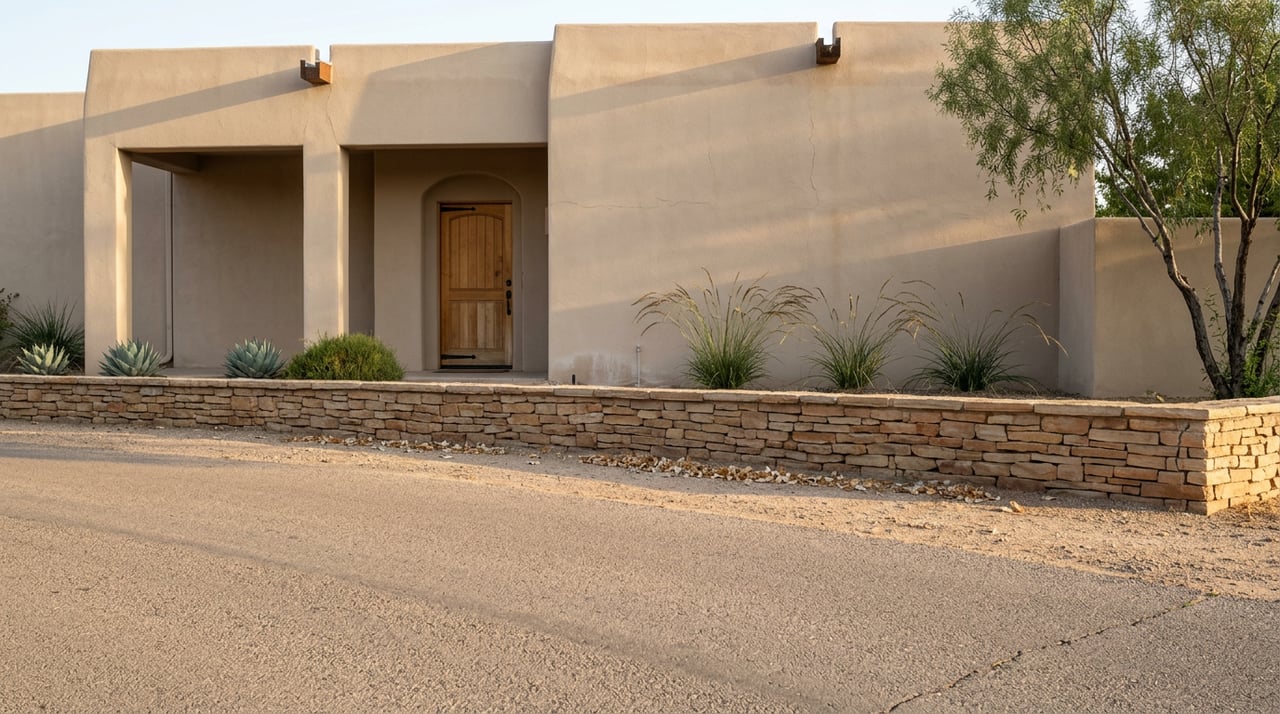
Las Campanas' Loop: Who Maintains the Roads and Club Amenities
September 10, 2026
September 10, 2026
A little after seven on a September morning, before the sun has cleared the Sangre de Cristos, a cyclist rolls out past the gatehouse, crosses NM-599, and turns onto Old Buckman Road. No badge check. No fob. The pavement out here belongs to the road, not the Club, and that distinction matters more than most people riding it have ever stopped to think about.
If you live in Las Campanas, you already know the ride. Ask three neighbors what "the loop" means and you'll get three different answers, and that disagreement is the first clue to a bigger story about who actually funds the community you're moving through.
Ask someone who mostly rides inside the gates and they'll describe an 11-mile curvy circuit through the neighborhood's own roads, the kind of ride you can do before coffee gets cold. Ask a cyclist who treats Las Campanas as one leg of a longer morning and the number changes fast. One rider's account of the route, posted to the local cycling blog Better Burque this past March, clocked the full loop closer to 25 miles and 2.5 hours: starting in town near the Santa Fe River Trail, crossing NM-599, climbing out toward Old Buckman Road at what the writer called the western edge of the Campanas loop, then working back through rolling terrain and smooth pavement before the weather, in that rider's words, went to hell.
Both numbers are true. They're just describing different rides. The short loop is the community's own road network, the kind of low-traffic circuit that draws cyclists precisely because the houses are big and the cars are few. The long loop treats Las Campanas as a corridor, a piece of a bigger route that starts in the Railyard, threads out past the community, and continues to the edge of the Caja del Rio. If you've ever wondered why your Strava numbers don't match your neighbor's for what sounds like the same ride, this is why.
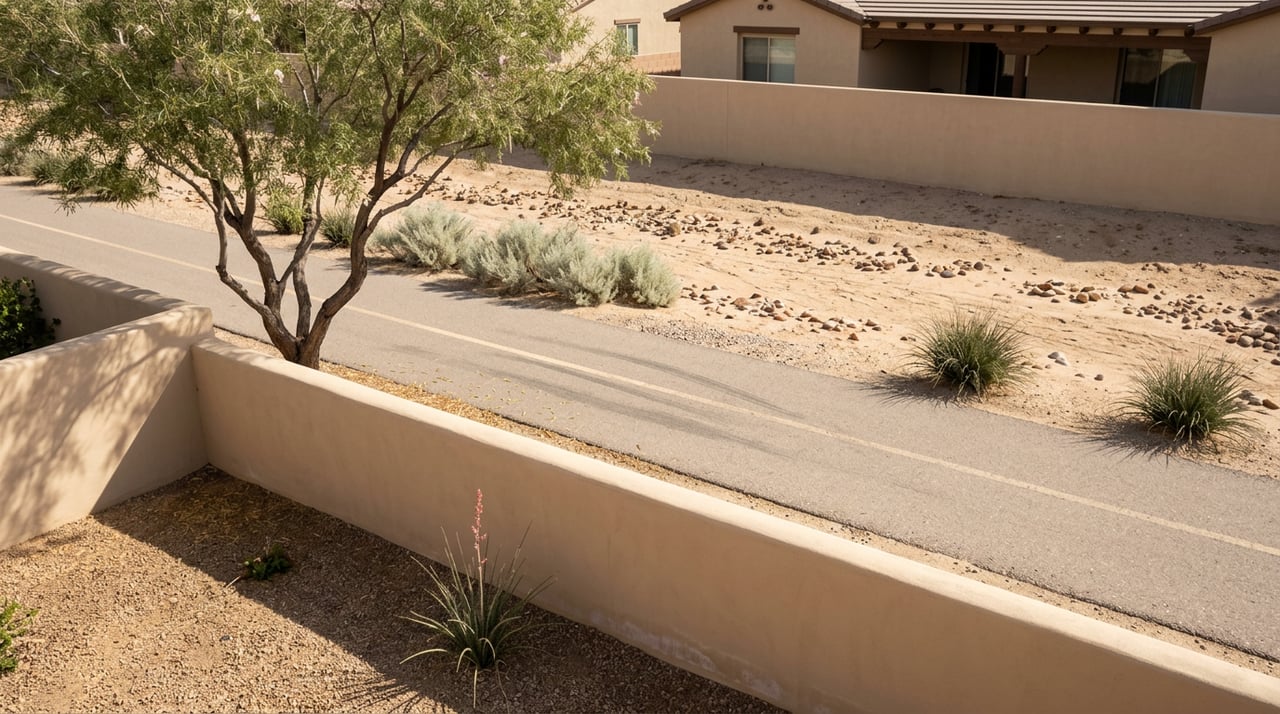
Here's the part that surprises people who've lived here for years. The pavement, the median strips, the trail signage, the bridges over the arroyos, none of that comes out of Club dues. It's the Las Campanas Owners Association's Maintenance Department that handles it, a crew that keeps an inventory of tractors, dump trucks, crack-sealing equipment, snowplows, cinder spreaders, and a road broom, alongside the blowers, mowers, and weed eaters for the smaller work. Trees get pruned. Streets get plowed. Storm damage gets attended to. That's HOA money, funded through owner dues, and it's a completely separate ledger from anything happening at the clubhouse.
The Association's own breakdown of responsibilities draws the line clearly: roads and hardscape on common parcels, trails, open space, and arroyo landscaping in common areas all fall to the HOA, while private lots remain each owner's job. Membership at The Club at Las Campanas is a separate, optional arrangement, not a requirement tied to owning property here. Which means the loop you ride, the trail your dog walks, and the road your car turns onto every morning are maintained by an entity that has nothing to do with the golf course.
Meanwhile, the Club has been running its own capital project for years, and it's a much bigger number than anything in the Maintenance Department's budget. Branded Imagine Tomorrow, the initiative is described on the Club's own site as a fully funded, multi-year capital improvement project delivering upgrades to member-facing spaces without triggering member assessments. When the project was first scoped out, the plan called for roughly $20 million over five to six years, concentrated on four areas members had flagged most in surveys: the Clubhouse and Torreon, the Fitness Center, the Log Cabin, and the golf facilities.
That's real investment, and it shows. The Club's Sunset Course currently holds the top ranking in New Mexico from Golf Digest, with the Sunrise Course rated fourth in the state. Both numbers are worth knowing if you're a member deciding where your dues are going, but here's the thing: none of that spending touches the road you rode this morning. Imagine Tomorrow is aimed at the Clubhouse, the fitness facility, the golf product, all spaces that require membership to use. The roads, the open space, the trail network that connects Las Campanas to the wider Santa Fe cycling and hiking scene, those live on a different budget entirely, one that gets far less attention because it doesn't come with a rendering or a ribbon-cutting.
Here's how the two systems actually break down:
| What it covers | Who funds it | Membership required? |
|---|---|---|
| Roads, common-area hardscape, entry gates | HOA (Las Campanas Owners Association) | No |
| Trails, open space, arroyo landscaping | HOA | No |
| Clubhouse, Torreon, Fitness Center, Log Cabin | The Club at Las Campanas (Imagine Tomorrow) | Yes |
| Golf courses (Sunrise and Sunset) | The Club | Yes |
| Dog Park and Yappy Hour gatherings | The Club | Yes, though open to all members regardless of golf status |
That last row matters more than it looks. The Dog Park, with its recurring Yappy Hour meetups, sits inside the Club's amenity list, meaning it's open to Club members whether or not they play a hole of golf. But the roads leading to it, the trails branching off from it, and the open space surrounding it are HOA territory, available to every resident regardless of Club status.
That's the split most people never think about until they're standing at the gatehouse trying to figure out why one amenity needs a membership card and another doesn't. The golf course, the fitness center, the spa treatments at Desert Willow: all Club, all optional, all funded by a $20 million capital plan built around member surveys. The road that got you there, the arroyo you rode past, the median strip someone trimmed last week: all HOA, all mandatory through dues, all running on a budget that doesn't make headlines.
None of this changes what a good ride looks like this time of year. Mornings are cooling into the 50s at 7,000 feet, which means the window for a comfortable loop stretches later into the day than it did in July. If you're taking the short version, the internal 11-mile circuit is enough for a pre-breakfast ride and doesn't require crossing 599 at all. If you want the longer version, plan for the climb out toward Old Buckman Road to take real time, not because the grade is severe but because the terrain rolls more than it looks like it should from a car window, and the Rio Grande access points near the road's end are worth the extra miles if you've got them.
Either way, the pavement holding up under you is HOA work, not Club work, and that's worth remembering the next time a pothole gets patched faster than you expected, or slower. The people fixing the road you love riding aren't the same people renovating the clubhouse you may or may not use. Two budgets, two crews, one neighborhood, and most of us never bother to ask which is which until something breaks.
If you're weighing what Las Campanas actually offers day to day, beyond the golf rankings and the renovation renderings, that's exactly the kind of ground-level detail the team at Ralph Alan Real Estate Group spends its time tracking. We live in these neighborhoods, we watch what the HOA and the Club are each spending on, and we're glad to talk through what any of it means for you, whether you're already riding that loop or just curious about the place you call home.
This article is general information, not legal, tax or financial advice. Consult a qualified professional about your situation.
Stay up to date on the latest real estate trends.
Article
Here's What It Actually Did
Get In Touch With Our Team To Learn More
Ralph Alan Real Estate Group
218 Camino La Tierra Suite B2 Santa Fe NM 87506 (505) 986-2000