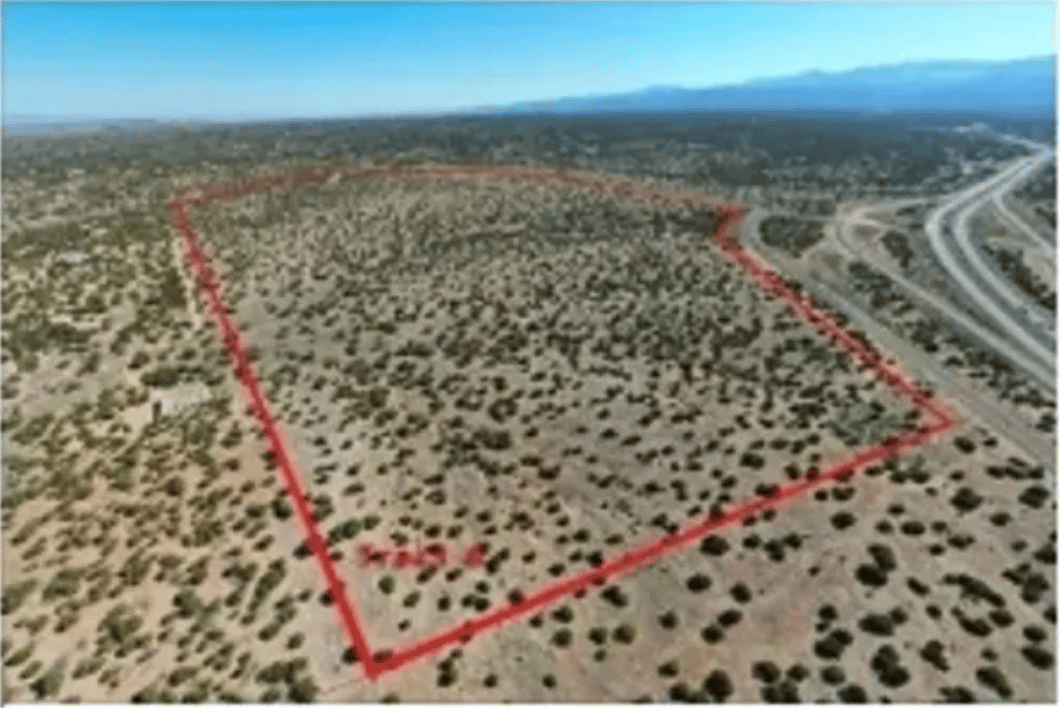
La Tierra Trails Near Las Campanas: What the Vote Changed
Article Ralph Larranaga September 3, 2026
Article Ralph Larranaga September 3, 2026
So the trails are safe now, right?
That's the read a lot of people took away from the last week of June, when Santa Fe County commissioners voted 3-2 to reject the Camino Verde conceptual plan, a proposed 158-home subdivision that would have straddled Camino La Tierra just north of NM 599, on the doorstep of Las Campanas. If you ride, hike, or walk a dog on the La Tierra Trails, the vote felt like relief after a spring of packed hearings and dueling letters to the editor. But if you use that trail system on any kind of regular basis, a rejected conceptual plan is a narrower outcome than the celebration suggests, and understanding exactly what it does and doesn't protect matter.
The fight ran for most of 2026. In April, a county hearing officer named Taylor Hartstein presided over a hearing on three technical variances the developer needed: shrinking side and rear setbacks from 25 feet to 10 feet, cutting driveway separation from intersections nearly in half, and permitting limited disturbance of slopes steeper than 30 percent for erosion control work. County staff recommended approval with conditions. By the time that hearing wrapped, a group calling itself Preserve Camino la Tierra Land already had a legal defense fund underway, arguing the variance request had jumped ahead of a full public hearing on the underlying subdivision itself.
By June 9, the conceptual plan hearing drew more than a hundred speakers over eight hours. Commissioners tabled a vote and asked for more analysis on traffic and infrastructure before reconvening on June 30, when they finally voted to deny the plan, 3-2. Commissioners Lisa Cacari Stone, Justin Greene, and Hank Hughes supported the denial. Adam Johnson and Camilla Bustamante voted to let it move forward.
Here's the timeline compressed, since the pacing of a land-use fight is easy to lose in the noise:
Date | What happened |
|---|---|
April 9, 2026 | Hearing officer reviews three requested variances; staff recommends approval with conditions |
April 21, 2026 | Opponents' legal defense fundraiser has raised over $62,000 toward a $250,000 goal; variance process draws criticism as incomplete |
May 21, 2026 | Santa Fe County Planning Commission takes up the variance requests |
June 9, 2026 | Marathon public hearing on the conceptual plan; vote tabled |
June 30, 2026 | Commissioners reconvene and vote 3-2 to deny the conceptual plan |
Samara Real Property, a Chicago-based firm doing business under the name Verde Communities in some of its other holdings, proposed clustering the 158 homes on smaller lots, some under an acre, in exchange for preserving more than half the 304-acre site as permanent open space, including a stretch along the historic Chili Line railbed near the Buckman Track. That trade, smaller lots for more preserved acreage, isn't a developer inventing loopholes. It's how Santa Fe County's Sustainable Land Development Code has worked since 2016 changes encouraged clustering over the kind of large-lot sprawl that used to define the county's edges. The code offers a density bonus specifically to developers willing to concentrate homes and set land aside.
Opponents weren't buying the trade at this scale. Concerns centered on Camino La Tierra itself, described repeatedly as the only viable route in and out of the area for wildfire evacuation, and on the development's wastewater plan, a private, on-site treatment system rather than a tie-in to an existing municipal plant, even though the homes would have drawn drinking water from the county's public water system. A Yahoo News report quoted Tom Linton, who has lived in Las Campanas for more than three decades, reflecting on what the open land around his home has meant to him:
"Part of the attraction of the area was the welcome tranquility provided by the acres of open land."
That sentiment, more than the traffic studies or wastewater diagrams, is probably what carried the room on June 30.
Here's the part that gets lost once a headline says "rejected." Denying a conceptual plan is an early procedural step, not a final word on whether that land can ever be built on. Even if commissioners had approved it, Samara would still have needed separate plat approval before construction could start. The reverse is also true: rejecting the conceptual plan doesn't rezone the property or place it in a conservation easement. It sends this specific, clustered, variance-dependent version back to the drawing board.
The land's underlying zoning, before any density bonus, still allows roughly one home per 2.5 acres. Do the math on 304 acres and you land close to 121 homes, a number one resident's letter to the editor did explicitly to make the point that a plan without the requested variances could still bring meaningful development to the same parcels, just without the clustering, the smaller lots, or the open space set-asides the county's own code was designed to encourage. Nothing about the June 30 vote takes that baseline off the table.
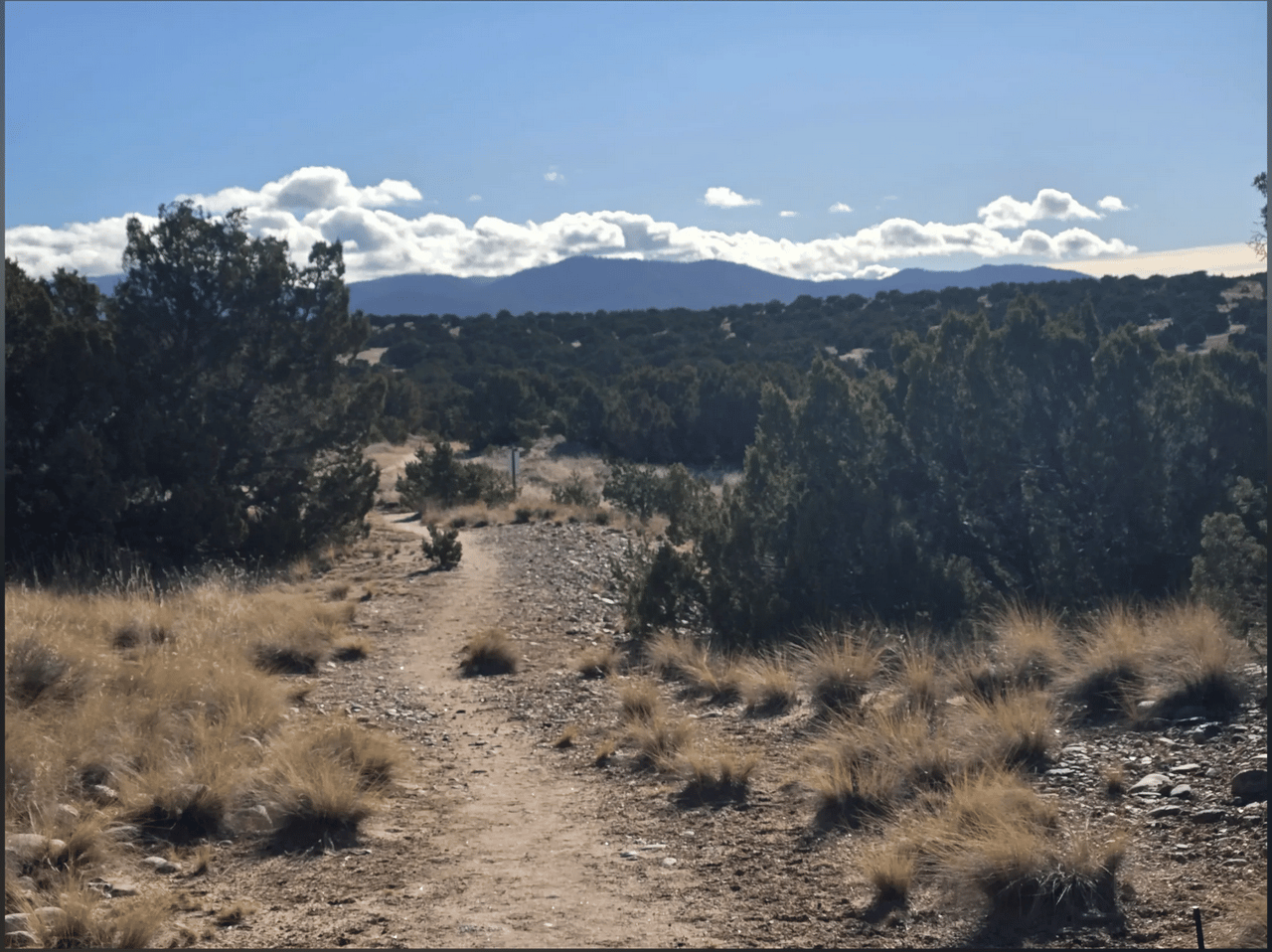
There's a second, quieter issue that the hearings barely touched: the access itself. Right now, people reach the 25 miles of La Tierra Trails largely by parking along Camino La Tierra and crossing the undeveloped, privately owned parcels that were the subject of this entire fight. It has existed because the land sat empty and nobody stopped anyone from using it. Santa Fe Conservation Trust has maintained the trail system under agreements with the city since 2014, including work on routes like the Hustle and Flow trail built with the Santa Fe Fat Tire Society, but those agreements govern city-owned trail segments, not the private acreage riders currently cross to get there.
If you use these trails from the Las Campanas side, a few practical things are worth knowing heading into fall:
None of this is meant to suggest the trails are in imminent danger. It's meant to correct the version of the story that treats June 30 as a permanent resolution. It wasn't. It was a specific developer's specific plan getting turned down by a specific 3-2 margin, on a piece of land that remains privately owned, still zoned for development, and still crossed daily by people.
For a neighborhood that markets itself on quiet and open horizon, that's worth understanding clearly rather than filing away as settled.
If you're weighing what any of this means for a property near Las Campanas or along the county's northwest edge, the team at Ralph Alan Real Estate Group tracks these land use questions as part of how we advise clients in the area. Get Your Instant Home Valuation to start a conversation about what's happening around your property today.
This article is general information, not legal, tax or financial advice. Consult a qualified professional about your situation.
Stay up to date on the latest real estate trends.
Article
Here's What It Actually Did
Get In Touch With Our Team To Learn More
Ralph Alan Real Estate Group
218 Camino La Tierra Suite B2 Santa Fe NM 87506 (505) 986-2000