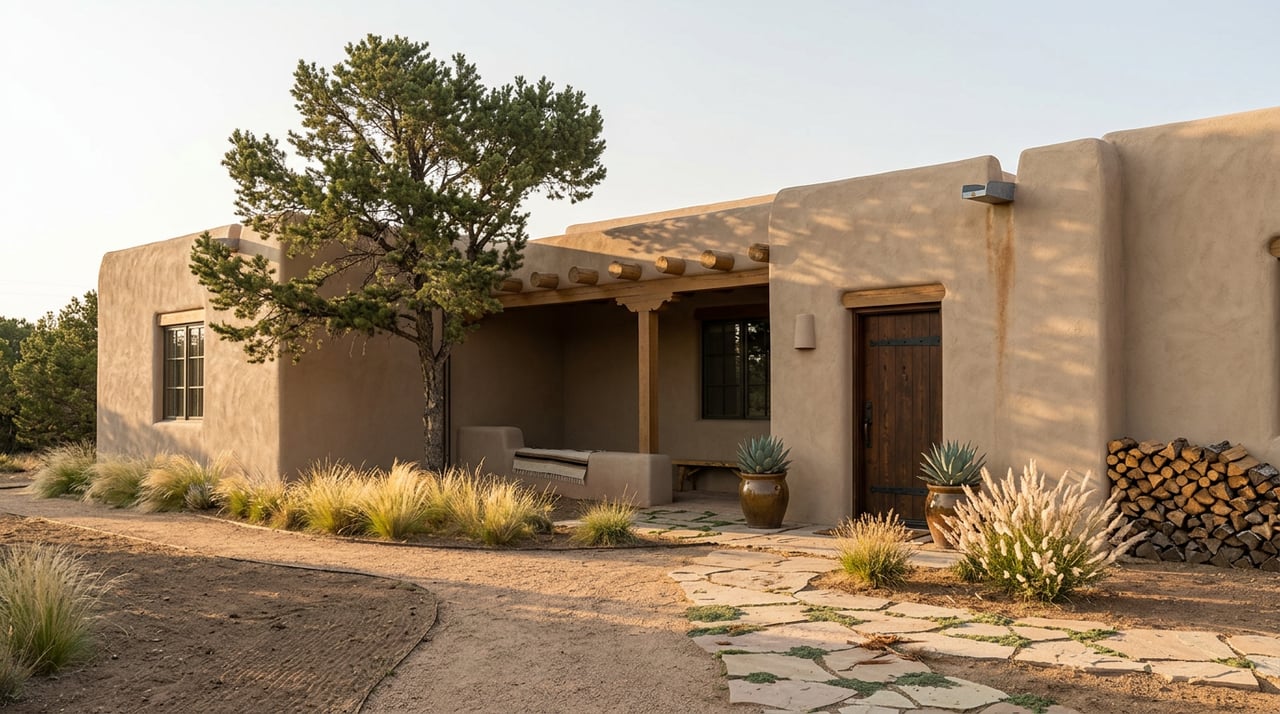
In Agua Fria, the Sewer Line Is Quietly Redrawing What Land Is Worth
September 24, 2026
September 24, 2026
Ask anyone shopping for land in Agua Fria Village why it's priced the way it is, and you'll get the same answer: it's rural, it's on well and septic, and the county won't let you subdivide small. That answer was true for decades. It is becoming less true this year, on one particular stretch of Rufina Street, for a reason that has nothing to do with zoning maps and everything to do with a pipe going into the ground.
The mechanism most buyers miss isn't the Traditional Historic Community designation itself. It's the utility line. Where that line reaches, the old math around lot size and density stops applying. Where it doesn't, the 2.5-acre-per-septic-system rule still runs the show, according to Homewise. Right now, in 2026, that line is moving, and it's worth understanding exactly how before you price a parcel based on what the village "always" allows.
Santa Fe County's Sustainable Land Development Code sets a minimum of 2.5 acres for any lot relying on a private septic system. For most of Agua Fria's history as a designated Traditional Historic Community, that single number did more to shape buildable lot sizes than any aesthetic or historic-preservation standard in the code. If you couldn't reach municipal sewer, your land had to be big enough to support a leach field on its own, and that pushed per-lot costs up and density down across most of the village.
That's the assumption baked into how a lot of land here still gets priced. But it was never true everywhere in the village at the same time, and a project moving through construction right now on Rufina Street shows exactly where the assumption breaks down.
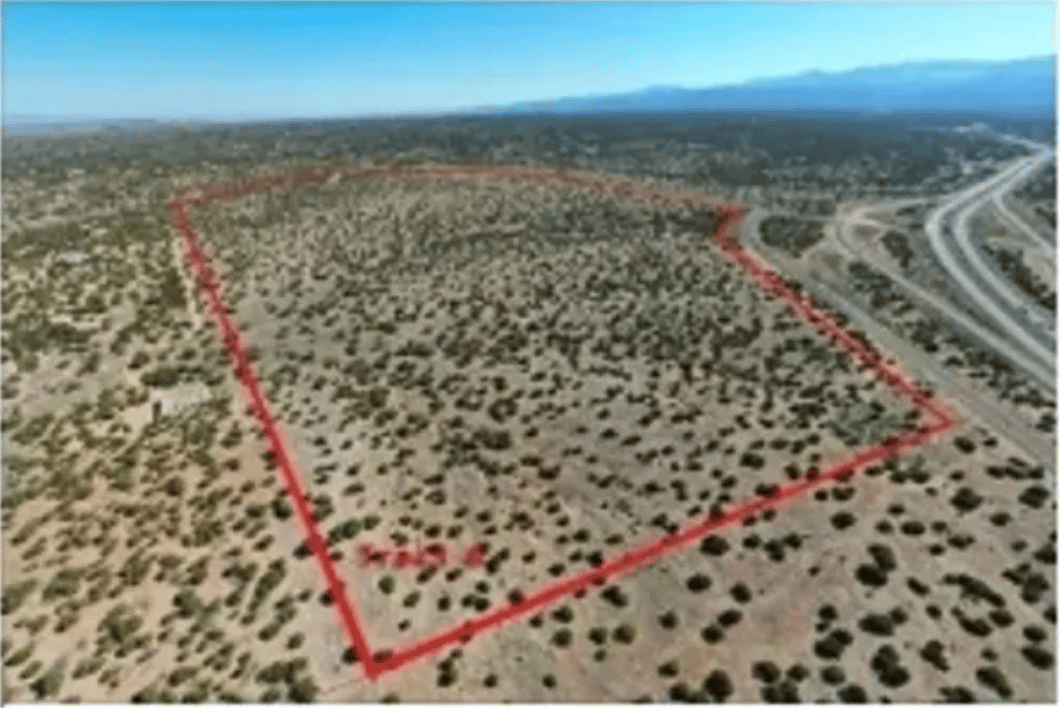
The Santa Fe New Mexican reports that Homewise, the Santa Fe nonprofit housing developer, won county approval in 2025 to build En Vuelo, a 30-lot subdivision on 10.6 acres at 3983 Rufina Street, inside the Village of Agua Fria's boundaries. Under the county's current density cap of three homes per acre in the village, as reported by The Santa Fe New Mexican, and with 5 acres of the site set aside as open space, En Vuelo's lots average around 6,000 square feet.
Just to the west sits Camino Vista Aurora, an older subdivision built before the county adopted its 2006 village plan. It runs closer to six homes per acre, roughly double En Vuelo's density, with lots averaging around 3,500 square feet.
Same village. Same THC designation. Two very different lot economics, because they were platted under two different rulebooks at two different moments.
| Subdivision | Platted | Density | Average lot size |
|---|---|---|---|
| Camino Vista Aurora | Before the 2006 village plan | About 6 homes per acre | About 3,500 sq ft |
| En Vuelo (Rufina St.) | Approved 2025 | Capped at 3 homes per acre under current code | About 6,000 sq ft |
The detail that matters most for a land buyer isn't the density gap itself. It's this: En Vuelo isn't going on wells and septic tanks. Homewise structured the project to pay a connection fee and hook directly into the City of Santa Fe's water system, inside a designated Traditional Historic Community that most buyers assume runs entirely on private wells.
The disagreement over En Vuelo centered on lot size and process, and it offers an example of the community input that may accompany future land projects.
William Mee, president of the Agua Fría Traditional Historic Community Association, argued the lots were too tight for the village's character, telling county commissioners that families need room for a garden and that oversized play equipment "take up a lot of room." County commissioners, including District 2's Lisa Cacari Stone, tabled the application once for more community input before approving it. County staff were clear on one point throughout: the neighborhood association doesn't hold zoning authority. The Board of County Commissioners does,
"You want a family garden. You've seen some of these jumbo [playground] slides. They take up a lot of room. Shouldn't kids be able to have [the room for] that?"
For a buyer or small developer, the distinction is that community input can shape the timeline, but the county commission—not the association—makes the zoning decision.
Here's the part that changes the underlying math for land beyond the current En Vuelo site. Santa Fe County is mid-construction on the Agua Fria Village Utility Sewer Expansion, a $15.1 million water and wastewater project that ranked among the county's top three state capital outlay priorities for the current fiscal year. District 2 Commissioner Anna Hansen pushed hard for its ranking, telling fellow commissioners she'd advocated "from Day One" for the village and would live with it landing at third on the list rather than first.
Phase III of that project went out to bid earlier this year. The county held a pre-bid meeting and site visit on May 7, 2026, at the Nancy Rodriguez Community Center, with bids due by May 26, 2026, using construction plans prepared by engineering firm Bohannan Huston. Part of the funding comes through a New Mexico Environment Department capital appropriation.
Every foot of new sewer line the county lays extends the footprint where the 2.5-acre septic minimum stops being the binding constraint on lot size. That doesn't mean every remaining parcel in Agua Fria will suddenly support En Vuelo-style density. The county's community density cap in the village stays at three homes per acre regardless of utility access, and the Agua Fria Village Association is restarting its community plan update process this fall, with monthly meetings beginning in October, that could revisit those numbers again. But utility access is the precondition. Without it, the 2.5-acre floor still applies no matter what the zoning map says is allowed on paper.
For a buyer or small investor looking at raw land in Agua Fria, the practical takeaway is that the same acreage can carry very different development value depending on one fact that isn't visible on a plat map: how close it sits to the current and planned sewer line.
Before making an offer on undeveloped or underdeveloped land in the village, it's worth confirming a short list of specifics:
None of this shows up in a standard comparative price analysis. It shows up in county capital project records, bid documents, and the minutes of community meetings that most out-of-market buyers never think to check.
The story of Agua Fria land right now isn't that it's cheap or that it's constrained. It's that those two conditions are unevenly distributed across the village, tied to a utility line that's actively under construction and a density code that treats older and newer subdivisions differently even when they sit on the same street. A parcel's price should reflect where it falls on that map, not just its acreage and its distance from the plaza.
That's the kind of thing you can only really price correctly with someone tracking the county's capital project calendar alongside the comparable sales. If you're looking at land or an infill opportunity in Agua Fria, the team at Ralph Alan Real Estate Group can walk the current utility footprint and permitting picture with you before you write an offer. Get Your Instant Home Valuation to start the conversation, or reach out directly for a parcel-specific read on what the sewer expansion means for a piece of land you're already watching.
This article is general information, not legal, tax or financial advice. Consult a qualified professional about your situation.
Stay up to date on the latest real estate trends.
Article
Here's What It Actually Did
Get In Touch With Our Team To Learn More
Ralph Alan Real Estate Group
218 Camino La Tierra Suite B2 Santa Fe NM 87506 (505) 986-2000